This article by professor Arturo Ignacio Sánchez*, in English and Spanish, examines population changes and the main issues affecting this diverse community in a very difficult time. Please comment this article at the bottom. QueensLatino.com wants to open a dialogue among ethnic communities.
As a result of the current stage of globalization and the rapid rate of social change, long-standing demographic, institutional, and political forms of behavior are being transformed in fundamental ways. The iconic immigrant neighborhoods of Corona, East Elmhurst, and Jackson Heights – which constitute Community Board 3 (CB3), provide a window into this dynamic process in Queens County.
During the U.S. Census of 1990, 2000, and 2010 the difficult-to-count immigrant population of CB3 was undercounted. Nonetheless, between 1990 and 2010, the overall population of CB3 grew from 128,924 to 171,576 residents. Moreover, this surge in population was accompanied by distinct winners and losers in ethnic and racial terms. For example, during the past twenty-years, CB3’s White population decreased from 36,567 residents to 20,334, while the number of African-Americans dropped from 19,989 to 10,683. Conversely, during this same period, the Hispanic population almost doubled from 56,357 to 110,108 residents, while Asian newcomers registered an explosive increase from 14,864 inhabitants to 26,996. Be that as it may, Puerto Ricans – who are U.S. citizens by birth – are an exception to the Hispanic demographic growth trend within CB3. According to the 2000 Census there were 6,181 Puerto Ricans living in district, yet by 2010 the total number dropped to 4,749 inhabitants.
In short, Whites and African-American have lost population, while Hispanics and Asians have gain population. Yet, this is only part of the overall story. A closer look at the demographic numbers reveals a far more interesting narrative. The decline in White residents occurred primarily in Jackson Heights; a neighborhoods that experienced a process of gentrification that wrought the displacement of immigrant and working-class renter households, and the influx of a home-owning subset of economically upscale White professionals. These White gentrifying households tend to be numerically smaller than the larger immigrant families that are being squeezed out of Jackson Heights by rapidly escalating rents and the decreasing number of affordable rental units – hence the dramatic drop in White residents. While the African-American decline in the population of East Elmhurst and Corona are associated with the growth in aging residents who have either died and/or opted to retire/relocate in states located in the Deep South.
The mix among Spanish-speaking ethnic groups has not been immune to the larger demographic changes currently transforming CB3. In 2000, the top four Spanish language groups were: Dominican Republic (20,234), Ecuador (15,973), Mexico (15,653), and Colombia (14,136). By 2010, the population ranking – for the top four Spanish-speaking ethnic groups – was restructured along the following lines: Ecuador (29,863), Mexico (28,503), Dominican Republic (18,048), and Colombia (16,194). The changes in Asian demography also constitute an interesting narrative. For example, in both the 2000 and 2010 Census, Chinese (8,589) and Asian Indian (7,462) populations continued to constitute the two largest Asian sub-groups. Yet, migrants from Bangladesh (4,192), Pakistan (1,961), and Nepal (601) are emerging as the most recent and fastest growing ethnic populations within CB3.
These dramatic demographic changes are filled with prospective political significance for the political and civic landscapes in CB3. In East Elmhurst and Corona the matrix of vibrant community-based institutions, political clubs, churches, and block associations that supported the growing political influence of African-Americans will ultimately be transformed by the decline in Black residents and the growing influx of immigrants. This calls forth two crucial questions. First, will the demise in the African-American population and the growth in the foreign-born population lead – in the worst case scenario – to a hollowing out of local political institutions, and a neighborhood landscape marked by political fragmentation? Second, in the best case scenario, will immigrants and bottom-up grassroots groups establish ethnic specific and/or progressive multi-cultural and multi-racial political/civic institutions that highlight concerns informed by a social justice perspective?
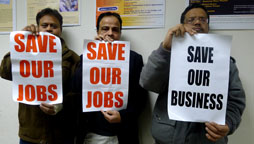
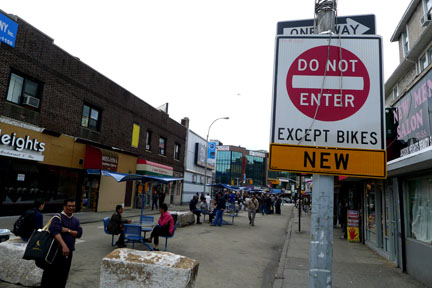
For Jackson Heights, the civic and political situation is qualitatively different. In effect, the larger process of gentrification has led to the establishment of new array of civic institutions and political coalitions that represent the specific interests of coop and condo owners. These young and highly educated residents support a range of initiatives that are framed and presented as “quality-of-life” issues that will benefit the so-called common good. Yet, these initiatives – by making Jackson Heights a more desirable, family friendly, and middle-class neighborhood – tend to increase real estate values and fosters the displacement of immigrants, working-class residents, and seniors on fixed incomes. Thus, in the short- and long-term these socio-economic processes are transforming the demographic and multicultural mix that characterized Jackson Heights. Moreover, tensions in land use can also exasperate relations between the new gentry and immigrant entrepreneurs as they compete over access to limited commercial locations and public spaces. In this regards, according to certain sectors of the Bangladeshi and Indian business community, the establishment of an automobile-free public plaza -along the 37th Road commercial corridor – has triggered an on-going struggle between a subset of immigrant entrepreneurs and the open space/green advocates that largely reside within the Jackson Heights Historic District.
The changing demographics driving the emerging political geometry in Corona, East Elmhurst, and Jackson Heights is still in the process of coalescing. Will the emerging political landscape support the civic, political, and social incorporation of immigrants, while also reinforcing the quality-of-life initiatives that improves the conviviality and sustainability of our immigrant neighborhoods? In short, will the emerging constellation of ethnicity, social class, and political voice support and maintain an ethnically and economically diverse mix of residents and commercial establishments? In fostering this equitable balancing act, it will be necessary to establish indigenous neighborhood institutions that reflect a humane set of values that supports and facilitates social justice, ethnic/racial diversity, and socio-economic differences. And in approximating these overarching values and institutional arrangements it will also be necessary to: open up lines of communications among the multiple political actors that dot our neighborhoods; establish progressive bottom-up coalitions with immigrant advocacy groups that work in our neighborhoods; and establish partnerships with our public universities as we work to develop a set of public policy tools that can be used to further a progressive and inclusive agenda of immigrant incorporation, sustainable neighborhoods, and a socially just city.
*Arturo Ignacio Sanchez, Ph.D. is chairperson of the Newest New Yorkers Committee of Queens Community Board 3. He has also taught courses on immigration and entrepreneurship at Barnard College, Columbia University, and Cornell University.
La Junta Comunal #3 (CB3)
¿Progresista o anticuada?
Arturo Ignacio Sánchez*
Como resultado de la actual etapa de globalización y los rápidos cambios sociales, la demografía, las instituciones y la política están siendo transformadas. Vecindarios icónicos como Corona, East Elmhurst y Jackson Heights, que constituyen la Junta Comunal #3 (CB3), son una ventana a este dinamismo en Queens.
Durante los Censos de 1990, 2000 y 2010 la población del CB3 no se contó en su totalidad. Entre 1990 y el 2010, la población del CB3 pasó de 128,924 a 171,56 residentes. Este surgimiento trajo ganadores y perdedores en términos raciales y étnicos. Por ejemplo, en los últimos 20 años, la población blanca del CB3 se redujo de 36,567 a 20,683 residentes, mientras que la población afroamericana decayó de 19,989 a 10,683. Por el contrario, la población hispana en este mismo período casi se duplicó de 56,357 a 110,108, mientras que los asiáticos aumentaron de 14,864 a 26,996. Los puertorriqueños, quienes son ciudadanos estadounidenses por nacimiento, son a excepción en CB3. En el 2000 habían 6,181 puertorriqueños y para el 2010 la cifra descendió a 4,749.
En breve, los blancos y negros perdieron población, mientras que los asiáticos e hispanos ganaron a nivel poblacional. Pero es sólo parte de la historia. Una mirada más de cerca nos muestra algo más interesante. El declive de la población blanca ocurrió principalmente en Jackson Heights, que ahora está pasando por un proceso de desplazamiento (gentrification), echando a un lado a los inmigrantes y a la clase obrera que paga renta para abrirle paso a una clase profesional blanca y adinerada. Estos hogares blancos tienden a tener menos hijos que las familias inmigrantes que están siendo obligadas a salir de Jackson Heights por el alto costo de la renta y la escasez de apartamentos para la renta. La reducción de la población negra en East Elmhurst y Corona está asociada a la población de edad avanzada que se ha muerto o decidió mudarse a los estados del sur.
La mezcla de grupos hispanos no ha sido inmune a estos cambios demográficos que están transformando CB3. En el 2000, los cuatro primeros grupos hispanos fueron los dominicanos (20,234), ecuatorianos (15,973), mexicanos (15,653) y colombianos (14,136). Para el 2010, los cambios poblacionales para estos grupos fueron así: ecuatorianos (29,863), mexicanos (28,503), dominicanos (18,058) y colombianos (16,194). Los cambios demográficos de los asiáticos son de este orden: chinos (8,589) e indios asiáticos (7,462) y esta tendencia se mantuvo hasta el 2010. Aunque emergieron nuevos inmigrantes de Bangladesh (4,192), Pakistán (1,961) y Nepal (601) como las nuevas comunidades del CB3.
Estos dramáticos cambios demográficos tienen mucha importancia política y cívica para el CB3. En East Elmhurst y Corona, las organizaciones comunitarias, los clubes, las iglesias y las asociaciones de manzana que apoyaron el surgimiento de la comunidad negra, serán transformadas por los nuevos inmigrantes y generando así dos importantes preguntas. Primero, en el peor de los casos ¿significa esto el derrumbe de las sagradas instituciones políticas? Segundo, en el mejor de los casos ¿los inmigrantes y sus organizaciones de base podrán crear instituciones progresistas, multirraciales y multiculturales de justicia social?
Para Jackson Heights, la situación política y social es diferente. El proceso de desplazamiento ha permitido el establecimiento de nuevas instituciones cívicas y coaliciones políticas que representan los intereses de los propietarios de cooperativas y condominios. Estos residentes jóvenes y educados apoyan iniciativas que son presentadas como asuntos de “calidad de vida” y de beneficio mutuo. Pero estas iniciativas, que hacen de Jackson Heights un lugar de ensueño, familiar y de clase media, tiende a incrementar la finca raíz y el desplazamiento de inmigrantes, de la clase trabajadora y de los ancianos que viven de varios ingresos. A corto y largo plazo estos cambios sociales están transformando a Jackson Heights. Además, el uso de la tierra también puede aumentar la tensión entre los nuevos empresarios que compiten por el acceso al poco espacio comercial y público. Como ejemplo, de acuerdo a algunos negociantes de Bangladesh e India, el no permitir el tránsito vehicular por la 37th Road ha generado confrontación entre inmigrantes comerciantes y los defensores de espacios abiertos que en su mayoría residen en el Distrito Histórico de Jackson Heights.
Los cambios demográficos en la geometría política de Corona, East Elmhurst y Jackson Heights, aún está en el proceso de fundirse. ¿El nuevo panorama político apoyará la incorporación de los inmigrantes al mismo tiempo que articula las iniciativas de calidad de vida para lograr la coexistencia y la sostenibilidad de nuestros vecindarios inmigrantes? Para equilibrar la balanza es indispensable crear instituciones autóctonas que valoren y faciliten la justicia social, la diversidad étnica y racial y las diferencias socioeconómicas. Para esta transición es necesario: abrir vías de comunicación para todos los grupos, crear coaliciones progresistas de la base hacia arriba y fomentar las alianzas con las universidades públicas para desarrollar un conjunto de herramientas de política pública para impulsar una agenda que incorpore inmigrantes, vecindarios que perduren y una ciudad sociable.
*Arturo Ignacio Sánchez, Ph. D. y presidente del Comité de Nuevos Neoyorquinos de la Junta Comunal #3 de Queens. Ha enseñado cursos de inmigración y empresarios en Barnard College, Columbia University y Cornell University.
Professor Sanchez has hit the nail on the head. Anyone who attended the Town Hall meeting in Jackson Hts. on April 10 would have noticed that local advocates of the 37th Road plaza all have something in common—they are white people who never shop at any of the businesses that have been severely impacted. They have an opinion, but they don’t put their money where their mouth is.
–Disgusted Boricua