There’s an old saying in politics: “you go where the voters are.”
The idea is to always reach out to individuals and communities and never take any group for granted.
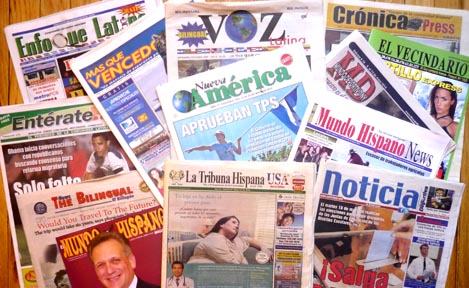
Unfortunately, that’s exactly what our city government is not doing by ignoring community and ethnic media, a central vehicle of communicating with millions of New Yorkers who rely primarily on this segment of the press for information.
According to an eye-opening report by the Center for Community and Ethnic Media at the City University of New York School of Journalism, community and ethnic newspapers have been systematically overlooked in advertising dollars, even as millions of dollars have flown into “mainstream” newspapers like the New York Times and the New York Post.
The report points to about $18 million in taxpayer money that’s spent on advertising, mostly public service announcements and notices of government job openings. Despite the fact that nearly 55% of New Yorkers rely on community and ethnic newspapers, these outlets receive only 18% of the City’s ad budget (the remaining 82% goes to the “big newspapers”).
The current policy doesn’t just shortchange local press; it deprives communities of important information and access to their government. The effect is particularly bad for immigrant communities where large numbers of resident speak multiple languages and rely exclusively on news media in their native language. For example, the report points out, that Spanish-language press received less than 4% of the advertising dollars, despite Latinos making up 28% of New York City’s population.
This is not merely disturbing; it’s dumb!
New Yorkers who speak Russian, Mandarin, Hindi, or any of the dozens of languages that make up our city’s uniquely beautiful cacophony deserve just as much information as their neighbors who don’t speak those languages. The same applies to readers of newspapers that cater to African American communities.
This has to end. And when I’m mayor it will. I’ll start, as the CUNY reports suggests, by instructing all agencies or employees in charge of placing ads to include minority and community newspapers in their buys. I am not talking about symbolic buys, but real ones. I’ll bring to City Hall, twice a year, as I used to do when I was comptroller, the publishers and editors of community and ethnic newspapers to make sure we are treating them fairly on ad buys and flow of information about government and its initiatives. I’ll make sure my commissioners meet these pillars of our free press so ad buys are not dependent on fancy packets of information or who you know but on the work and influence these newspapers have of communities throughout our diverse city.
As the grandson of proud immigrants from the Caribbean, I have seen first-hand the role that ethnic media plays in New Yorkers’ lives. For so many of us, ethnic and community news outlets have been our primary source of news and information at one time or another in our lives. They are the lynchpin in connecting our past, present, and future.
Ethnic and community newspapers serve a great purpose for New Yorkers. They should get their fair share of government support and our communities should get their fair share of information. When I’m mayor, I will see to it that this happens.
By William “Bill” Thompson, candidate for NYC Mayor
THE REPORT
For years, publishers of small community and ethnic newspapers in New York City, many of whom are regular contributors to Voices of NY, have complained that local government agencies overlook them when choosing where to run ads about their programs and services.
The Center for Community and Ethnic Media decided to find out if this was true. Representatives of the Center interviewed city officials, advertising executives and newspaper publishers, and reviewed publicly available records, including some retrieved through Freedom of Information Law requests.
The full report can be read here, but the primary findings were:
New York City is currently spending about $18 million a year to convey messages about health, education, transportation, economic development, as well as job opportunities at city agencies, to the public.
About 82 percent of the ad budget of city agencies is earmarked for mainstream publications such as The New York Times, the New York Post, the New York Daily News, amNY and MetroNY. The rest is dispersed among smaller community and ethnic publications, many of which are published in languages other than English.
There are more than 270 publications that serve the immigrant and minority populations in the city, published in 36 languages. Eighteen of them are daily papers that are published in nine languages.
Although the combined circulation of community and ethnic publications is about 4.5 million, equal to 55 percent of the city’s population, they receive about 18 percent of the city’s ad budget.
Hispanics, meanwhile, make up over 28 percent of the city’s population, but in recent ad spending, Spanish-language publications have garnered less than 4 percent of the total.
The city has language-access laws and executive orders on its books to ensure that essential city services are known about and understood by residents who are not proficient in English. These policies have not been applied to the city’s advertising messages.
The city requires all city agencies to place their ads through advertising firms that have been awarded city contracts to provide that service.
Two small, private ad placement firms have consistently won the city’s advertising contracts – one for 15 years, the other for 24 years.
Although public officials assured representatives of the Center and NYPA in 2011 that the next round of contract bidding would generate fresh competition, those two firms were again awarded new contracts.
The city’s ad contracts have previously been for terms of one to three years; the new contract is for five years.
The Center’s report was researched and written by Professor Sarah Bartlett, director of the Urban Reporting program at the CUNY Graduate School of Journalism, with the assistance of Garry Pierre-Pierre, executive director of the Center. Funding for the report was provided by the Charles H. Revson Foundation.
– See more at: http://voicesofny.org/2013/03/report-city-shortchanges-community-and-ethnic-press-when-it-comes-to-ad-dollars/?utm_source=Voices+Newsletter&utm_campaign=c502793e62-RSS_EMAIL_CAMPAIGN&utm_medium=email#sthash.w3Y1Djql.dpuf